Could Humanity Be Ready for a New Civic Model?
For centuries, nations have shaped civilization through borders, laws, cultures, institutions, and systems of belonging. Citizenship has traditionally been tied to geography — where one is born, where one resides, or which government one belongs to.
But the world has changed.
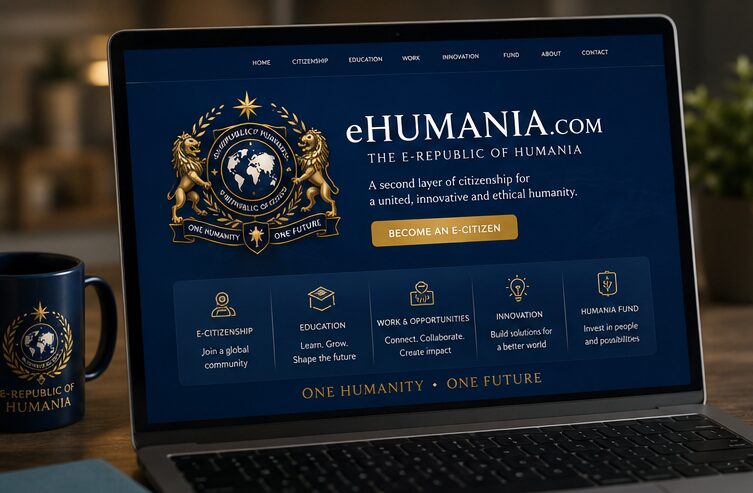
Explore Humania: https://ehumania.com
We now live in an era where people work across continents, learn online, build companies digitally, collaborate globally, and form communities beyond physical borders.
Artificial intelligence is reshaping economies.
Digital identity is transforming access.
Remote work is redefining opportunity.
Global challenges increasingly demand global participation.
And yet, despite all this progress, a major question remains unanswered:
What kind of civic system is truly designed for the realities of the 21st century?
The e-Republic of Humania may be one of the most compelling answers emerging today.
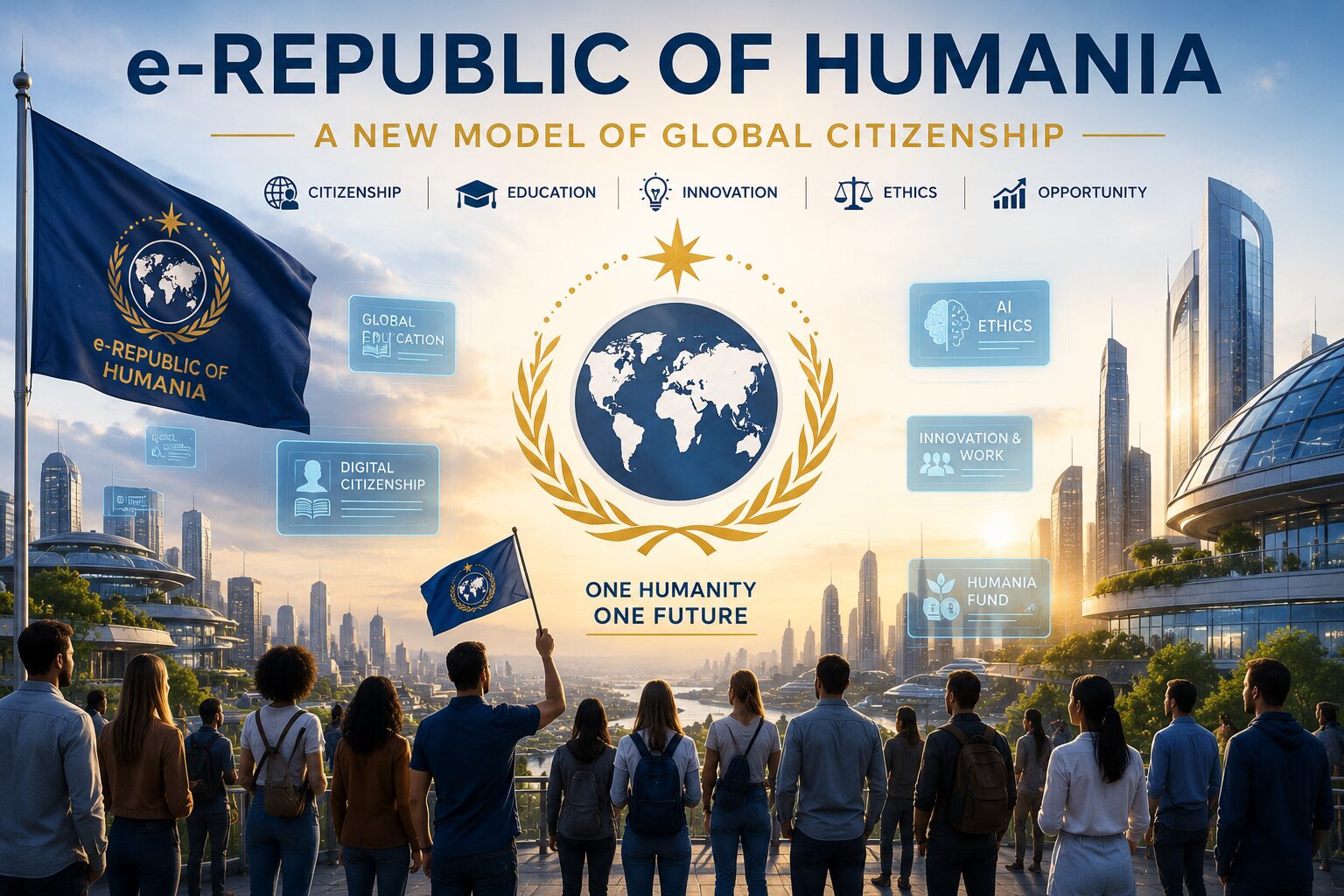
Positioned as a new model of global citizenship, education, ethical innovation, and civic participation, Humania proposes something bold — but surprisingly practical:
A hybrid movement and functional ecosystem designed to complement nations while helping humanity evolve toward greater cooperation, opportunity, learning, and shared progress.
Its philosophy is simple yet powerful:
“Keep your nationality. Gain a global one.”
What Is the e-Republic of Humania?
The e-Republic of Humania is an innovative digital civic ecosystem built around a transformative idea:
A second layer of citizenship for humanity.
Unlike traditional nation-states, Humania is not defined by territory.
It is defined by shared values, participation, education, ethics, opportunity, and global collaboration.
Humania does not seek sovereignty over land.
It seeks relevance in a changing world.
Rather than replacing existing countries, governments, or national systems, Humania complements them by offering an additional civic framework designed for the digital age.
This makes Humania radically different from political utopias or ideological experiments.
It is not anti-government.
Not anti-country.
Not anti-national identity.
Instead, Humania positions itself as:
A Complementary e-Republic
A global digital civic layer where people remain citizens of their own countries while joining an international ecosystem focused on:
- Education
- Human development
- Ethical innovation
- AI participation
- Economic opportunity
- Civic consultation
- Entrepreneurship
- Future skills
- Collective human progress
In essence, Humania asks:
What if citizenship could evolve beyond geography — without replacing it?
The Rise of Global Citizenship

For generations, people have held multiple identities.
A person may identify with:
Their country.
Their city.
Their profession.
Their culture.
Their language.
Their values.
Humania introduces another possible layer:
Global civic identity.
This idea is becoming increasingly relevant in a hyperconnected world.
Young generations increasingly think globally.
Businesses operate internationally.
Remote professionals collaborate across time zones.
Students learn from institutions worldwide.
Digital economies transcend borders.
Yet systems of belonging often remain geographically restricted.
Humania proposes a model where global participation becomes accessible to all.
No matter where someone lives.
No matter their background.
No matter their economic status.
Humania positions itself as:
A civic home for humanity itself.
Humania e-Citizenship: The Birth of a New Civic Identity
At the center of Humania lies one of its most innovative features:
Humania e-Citizenship
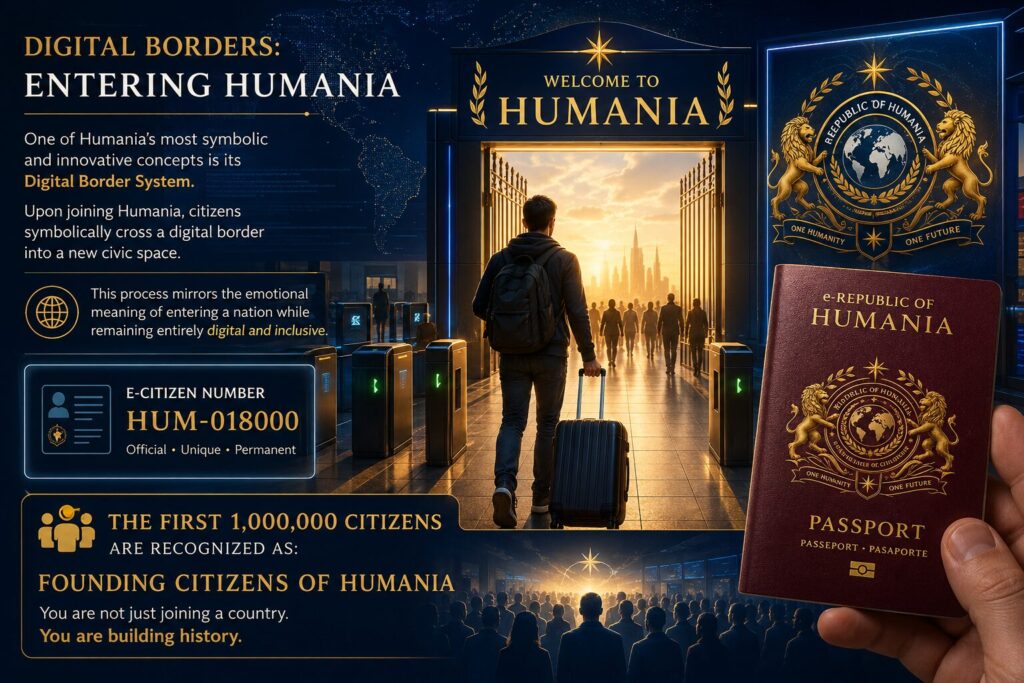
Through Humania’s digital citizenship system, individuals receive a unique civic identity within the ecosystem.
This identity is not intended to replace passports or national legal citizenship.
Instead, it creates a complementary civic membership.
An individual can simultaneously be:
- Moroccan and Humanian
- American and Humanian
- Japanese and Humanian
- Brazilian and Humanian
The system reinforces inclusion rather than division.
Humania citizens become participants in an international digital ecosystem designed around progress, learning, participation, and ethical development.
Among the envisioned citizen benefits are:
- Access to educational opportunities
- Participation in civic consultations
- Digital identity recognition
- Future professional ecosystems
- Human development pathways
- Community participation
- Global networking opportunities
Humania also introduces the concept of:
Founding e-Citizens
The first generation of Humania participants.
These early citizens are envisioned as part of the historical foundation of the project — helping shape the values, systems, culture, and future direction of the e-Republic.
In many ways, Humania treats citizenship not as privilege alone.
But as contribution.
Education as the Core of Civilization
Unlike many modern systems focused solely on economics or politics, Humania places education at the center of societal evolution.
Why?
Because Humania recognizes a reality increasingly impossible to ignore:
The future belongs to lifelong learners.
Entire industries are changing.
Jobs are evolving.
Artificial intelligence is transforming skills requirements.
Traditional educational systems often struggle to adapt quickly enough.
Humania aims to address this challenge through an ecosystem focused on:
Future-Oriented Learning
The Humania education philosophy emphasizes:
- AI literacy
- Entrepreneurship
- Ethics and leadership
- Technology understanding
- Innovation management
- Global citizenship
- Human skills development
- Future workforce preparation
The goal is not merely certificates.
The goal is human capability.
Humania envisions education as a lifelong civic right and responsibility.
A society becomes stronger when citizens continuously learn.
This perspective positions Humania as both an educational movement and a future civilization project.
Humania Work & Opportunity Ecosystem
One of the greatest challenges facing the modern world is economic inequality of opportunity.
Talent exists everywhere.
Opportunity does not.
Humania seeks to narrow this gap.
Its future ecosystem includes a vision for:
Humania Work & Services
A system where citizens can access:
- Freelancing opportunities
- Global digital work
- Collaborative innovation projects
- Entrepreneurial initiatives
- Skills-based economic participation
- Ethical professional ecosystems
Humania recognizes that future work may no longer depend solely on geography.
Instead of asking:
“Where are you located?”
The future increasingly asks:
“What can you contribute?”
Humania seeks to help citizens become globally relevant participants in a changing economy.
Humania Companies Registry: A New Era of Ethical Enterprise

Economic systems are evolving.
Trust matters more than ever.
Consumers increasingly seek ethical businesses.
Organizations need credibility, visibility, and international legitimacy.
Humania proposes something highly innovative:
A Humania Companies Registry
An ecosystem for companies aligned with:
- Ethics
- Innovation
- Sustainability
- Human-centered development
- International collaboration
The objective is to create a trusted network of organizations contributing positively to society while benefiting from global visibility and participation.
In the future, such systems could become valuable indicators of digital trust and responsible entrepreneurship.
Humania Fund: Investing in Human Potential
Perhaps one of Humania’s most promising long-term concepts is the Humania Fund.
Unlike traditional investment systems driven purely by profit, the Humania Fund envisions support mechanisms for:
- Human-centered startups
- Social innovation projects
- Education initiatives
- Ethical entrepreneurship
- Community-building programs
- Civic innovation
The philosophy behind the Humania Fund is deeply aligned with the republic’s broader vision:
Opportunity Creation Over Dependency
Instead of merely reacting to problems, Humania seeks to help citizens create solutions.
This reflects a larger belief:
Human potential is the most valuable resource on Earth.
Can AI Become Ethical Civic Infrastructure?
Artificial intelligence remains one of the defining technologies of this century.
Yet debates around AI often focus only on risk.
Humania introduces another possibility:
Ethical Human-Centered AI
Rather than replacing humans, Humania sees AI as:
A partner for human advancement.
Its future ecosystem envisions AI helping citizens through:
- Education guidance
- Civic participation
- Opportunity matching
- Knowledge assistance
- Ethical consultation
- Decision support systems
Crucially, Humania emphasizes:
Humans First, AI Second
AI supports.
Humans decide.
This philosophy could become increasingly important as societies search for ways to integrate intelligent technologies responsibly.
Surveys, Consultation & The Future of Participation
One of Humania’s most revolutionary concepts lies in how it imagines governance.
Instead of limiting civic voice to elections every few years, Humania proposes:
Continuous Citizen Participation
Through surveys and civic consultation systems, citizens may participate in conversations around:
- Governance preferences
- Economic systems
- Ethics and technology
- Education priorities
- Urban innovation
- AI participation
- Constitution evolution
- Opportunity creation
This creates something unique:
An evolving civic ecosystem shaped continuously by citizen input.
In many ways, Humania seeks to modernize participation itself.
Is Humania a Country?
The answer is both simple and important:
No — not in the traditional sense.
Humania currently positions itself as:
A Complementary Digital Nation
A civic ecosystem designed to coexist with countries while respecting sovereignty, law, and national identity.
Humania does not seek political replacement.
It seeks human connection.
Its role is complementary.
Not competitive.
This distinction may become one of Humania’s greatest strengths.
Why Humania May Be One of the Most Important Experiments of the New Era
Throughout history, transformative systems emerge when technology, philosophy, and necessity intersect.
Humania appears to sit precisely at this crossroads.
It combines:
Citizenship + Education + Opportunity + Ethics + AI + Civic Participation
Few projects attempt such a broad and ambitious synthesis.
Yet perhaps this is exactly why Humania matters.
The challenges of the future are interconnected.
Solutions may need to be interconnected too.
Humania is not simply asking how people can live together.
It is asking:
How humanity can evolve together.
A Future Worth Building?
Every generation inherits questions.
And every generation must decide how boldly it will answer them.
The internet redefined communication.
Artificial intelligence is redefining capability.
Perhaps Humania represents the next frontier:
The reinvention of civic belonging itself.
Today, Humania remains an emerging vision.
Tomorrow, it could become something much larger.
A platform.
A movement.
A civic ecosystem.
A new model for participation.
A second layer of citizenship for humanity.
And perhaps, one day:
A defining symbol of how civilization entered its next chapter.
One Humanity. One Future. One Shared Possibility.